TRYING TO REMEMBER BEING BORN

Trying to Remember Being Born is an ongoing experiment with the impossible. Rooted in my obsession with a Hi8 tape of my birth first shown to me at age five, the project explores the ruptures between memory, media, and reality.

What began as a fascination with the surreal power of rewinding and replaying moments—home videos that shimmered with warmth, nostalgia, and the illusion of control—shifted into something more disorienting. The tapes contradicted some of my most cherished “organic memories,” unraveling moments that had defined my sense of self. This collision between lived experience and technological record forced me to ask questions about the nature of memory, the trust we place in representation, and the quiet violence of seeing my own reality disproved.

As the project unfolded, it intertwined with my grandmother’s struggle with dementia, mirroring my own sense of dislocation from memory. Together, we shared the uncanny space of forgetting: hers imposed by disease, mine by the destabilizing power of the archive. This personal dislocation opened onto broader histories of erasure—particularly the ways women’s health has been shaped by denial, exploitation, and silence.

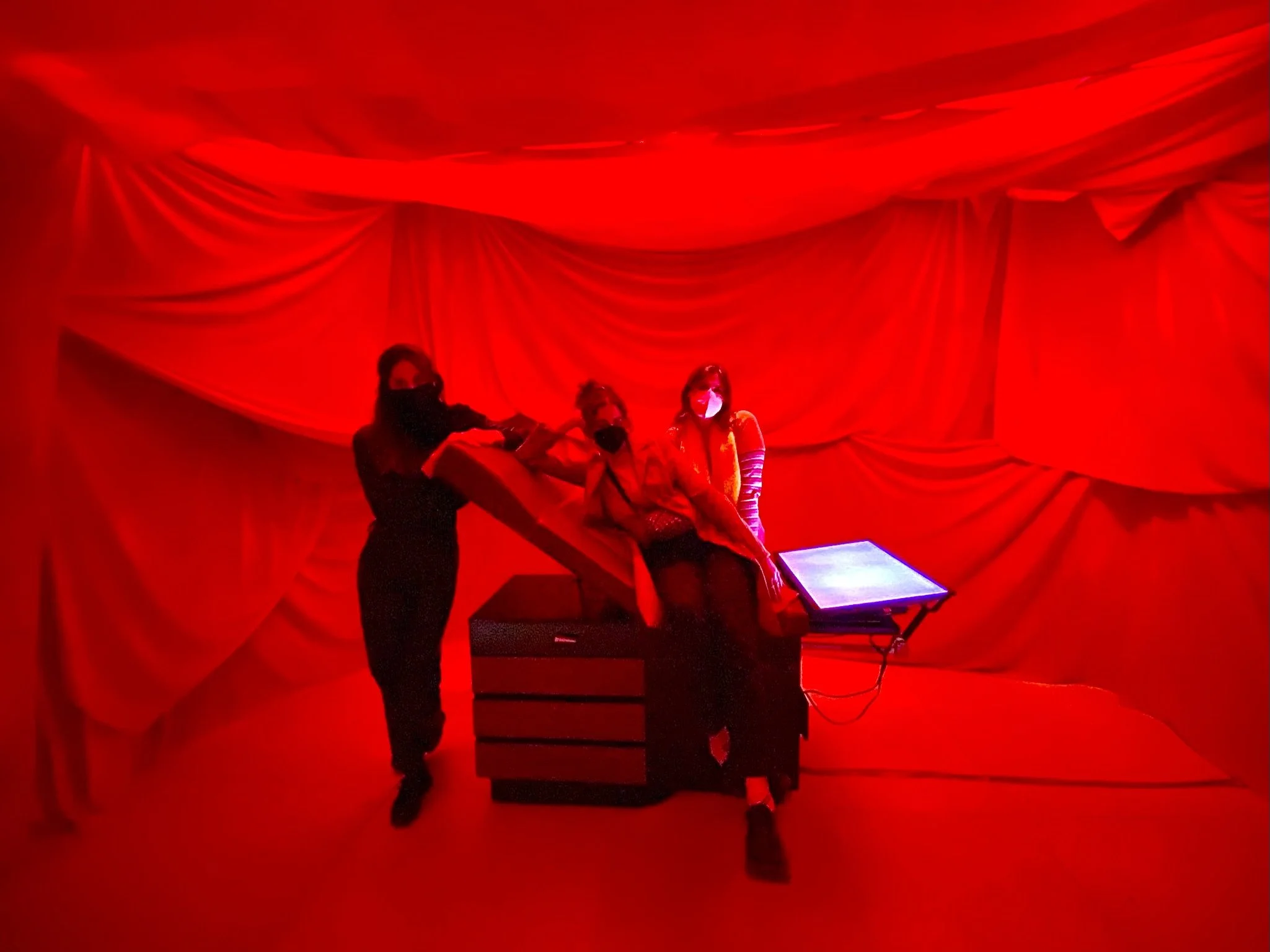
Gynecological Exam Chair, Red Velvet Theatre Curtains, Monitor & Video, Hi8 Video Tape of Artist’s Birth, 2022


The project was ultimately visualized in my thesis show through a two-room installation.

One room simulated a waiting room filled with notes, visual cues, and texts designed to reveal hidden medical atrocities within my own family’s bloodline and those obscured from public view—particularly in relation to women’s health. It pointed to the ongoing legacy of white doctors and medical institutions enacting harm on women of color in the name of research, as well as the systemic gaslighting of women who live with chronic pain and are told their pain isn’t real. Within this context, the discovery of my grandmother’s emergency hysterectomy became both personal and political, linking familial silence to broader histories of erasure.

Beyond the waiting room, viewers entered a Lynchian birthing space, draped floor to ceiling in red velvet, its center occupied solely by a stark gynecological exam chair. On the chair sat a monitor playing a distorted version of my birth video, collapsing the intimacy of birth into a clinical spectacle. The room’s atmosphere suggested a return to the womb, but one rendered uncanny and estranged—as if what should be the most familiar site is now unreachable, abstracted by time, memory, and technology.

In the end, the project embraces forgetting not only as a curse but as a paradoxical form of liberation—a way to navigate the dissonance between what is remembered, what is recorded, and what must be let go.


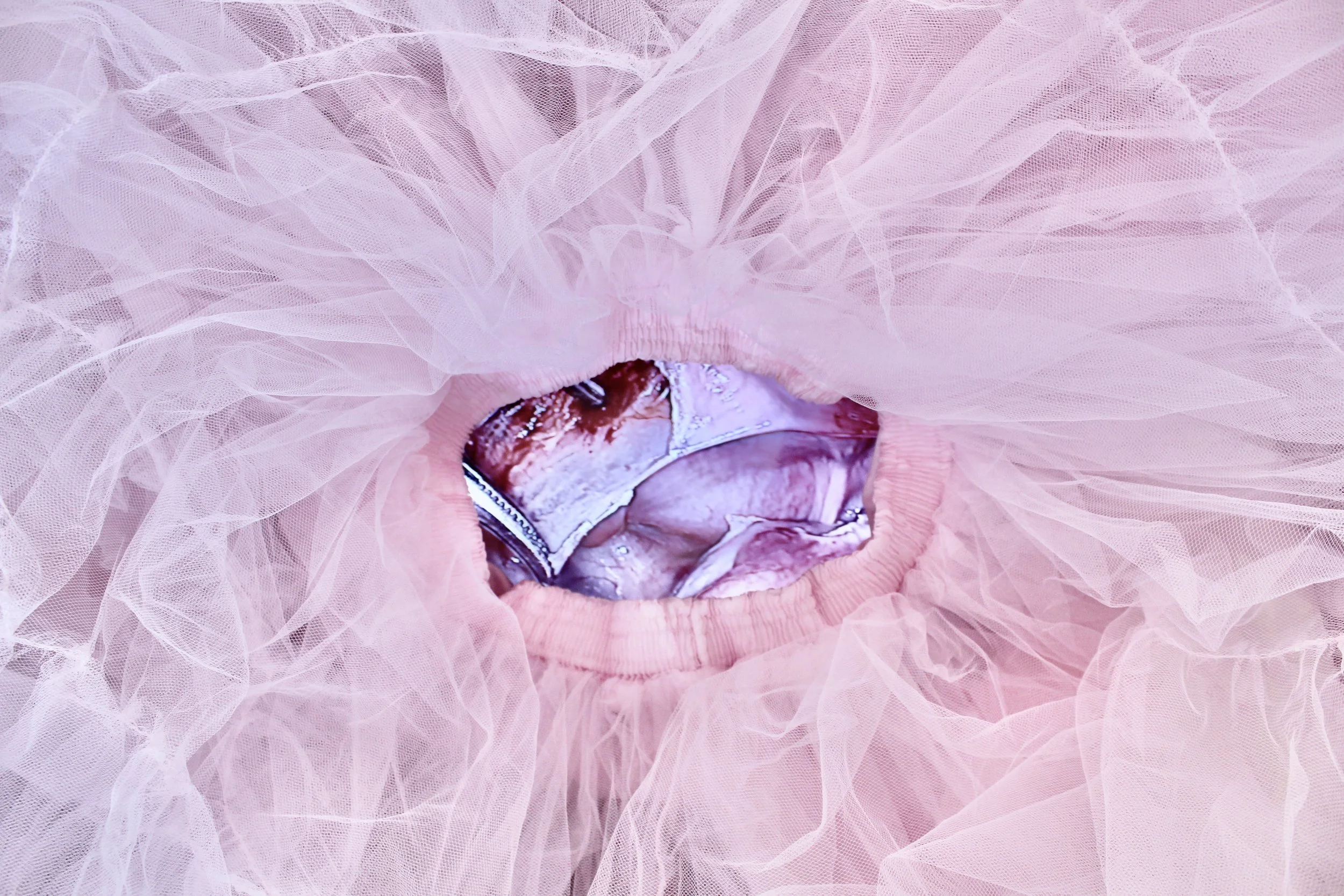
Pink Tutu, Video Screen, Intraoperative Hysterectomy Video, Found Waiting Room Chairs, Pink Medical Curtain, 2022

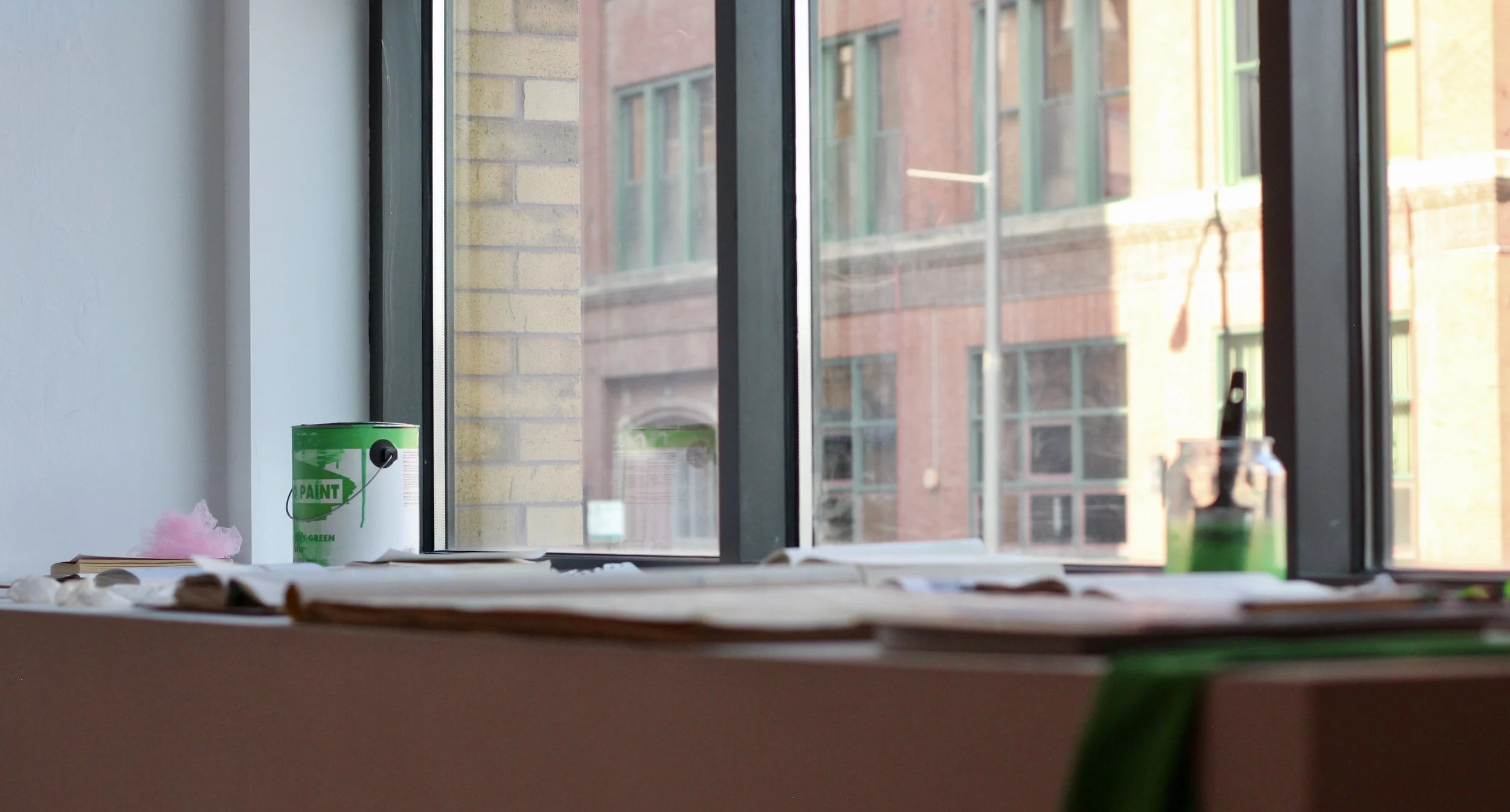
Canvas, Chroma Key Green Paint, Hi8 Video Tape as Pallet Knife, Sharpie, 2022


PREMIERED at Ouroboros @ Gallery 400 / Chicago, Illinois . 2022